Bluebonnet: A Refined Script Font for Digital Branding
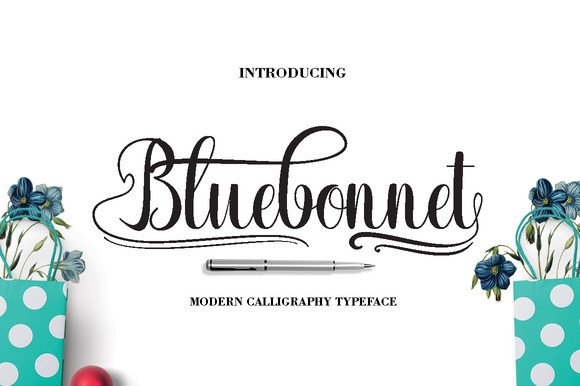
As a UI designer who builds landing pages, SaaS dashboards, and boutique e-commerce experiences, I treat typography like architecture—it shapes how users move through a site, where they pause, and what feels trustworthy or aspirational. Bluebonnet stands out in my font library not as a novelty, but as a purpose-built script font with digital intentionality. Its delicate yet confident strokes, elegant flourishes, and thoughtfully designed ligatures give it presence without sacrificing clarity—especially at larger sizes on modern screens.
Bluebonnet belongs to the Script Amp category: a class of expressive display fonts engineered for impact, not extended reading. It’s not meant for body copy—but that’s exactly why it excels in high-visibility, high-intent areas: hero headlines, testimonial quotes, product name treatments, and branded section dividers. When used intentionally, Bluebonnet reinforces tone before a single word is read. It signals warmth, craftsmanship, and human-centered design—ideal for coaching brands, artisanal online stores, creative portfolios, and premium course sales pages.
In practice, I’ve used Bluebonnet across several real-world projects with strong conversion results. On a wedding planning SaaS landing page, pairing Bluebonnet for the headline “Your Vision, Perfectly Planned” with Inter for body copy created instant emotional resonance—while keeping scanning effortless. For a ceramicist’s Shopify store, Bluebonnet appeared only in the logo lockup and banner tagline (“Hand-thrown. Heart-led.”), never below 24px, always on light or softly textured backgrounds. That restraint preserved readability and avoided visual fatigue. On mobile, I serve Bluebonnet only for headings above 32px—and always test contrast against background images using browser dev tools.
Readability on screen depends less on the font itself and more on how it’s deployed. Bluebonnet’s open counters and balanced spacing hold up well at 40–60px on desktop, but drops off quickly below 28px—even with letter-spacing adjustments. I avoid using it for buttons, navigation labels, or form fields. Instead, I reserve it for moments where hierarchy and brand voice converge: a course title on a Teachable sales page, a featured client quote overlaid on a muted video background, or the “About” section header on a founder’s personal portfolio. In those contexts, Bluebonnet doesn’t compete with content—it elevates it.
Font pairing is non-negotiable with display scripts like Bluebonnet. My go-to system pairs it with a neutral, highly legible sans serif—like Poppins, Manrope, or even system fonts (SF Pro, Segoe UI) for maximum performance. For editorial or luxury-facing sites, I’ll occasionally pair Bluebonnet with a refined serif like Cormorant Garamond—but only when the serif has generous x-height and open apertures to avoid tonal clash. The rule is simple: Bluebonnet leads; the supporting typeface serves.
What makes Bluebonnet especially valuable for digital creators is its included OpenType features. The flourishes aren’t decorative afterthoughts—they’re contextual alternates that activate automatically with ligatures turned on in CSS (font-feature-settings: "liga", "clig";). This means “The” or “and” render with subtle connected strokes, adding rhythm without manual glyph swapping. For designers using Figma or Webflow, enabling these features in text styles ensures consistency across prototypes and live sites.
Licensing matters—especially when shipping fonts to production. Bluebonnet is a commercial font, meaning it requires a web license for use on live domains, client sites, SaaS platforms, or digital templates sold on marketplaces. I always verify the license includes WOFF2 support (for optimal loading), cross-browser compatibility, and usage rights for embedded assets like email headers or PDF invoices. Some versions include multilingual glyphs (Latin Extended-A), which is essential for global-facing brands—but I double-check coverage for accented characters before finalizing a brand kit.
For responsive layouts, I apply Bluebonnet selectively—not universally. On desktop, it shines in hero sections and testimonial highlights. On tablet, I scale it down slightly but keep it active only in primary headings. On mobile, I often swap to the supporting sans serif for all text except the largest H1—using media queries to preserve performance and tap-target size. This isn’t a limitation of Bluebonnet; it’s smart typography hygiene.
Where Bluebonnet truly differentiates itself from other script fonts is in its balance of personality and polish. It avoids the overly casual looseness of many handwritten fonts and the stiff formality of traditional calligraphic faces. The baseline is steady, the stroke contrast moderate, and the terminals clean—not scratchy or overly ornate. That makes it versatile across industries: a wellness coach uses it for “Breathe Deeply” in a modal overlay; a stationery brand uses it for product names on product cards; a boutique hotel uses it for “Reserve Your Stay” in a sticky CTA bar—all while maintaining professionalism and approachability.
If you’re evaluating Bluebonnet for your next project, ask two questions: Where does this font earn its place? and What does it say about the brand before users scroll? When used with discipline—paired wisely, sized appropriately, and licensed correctly—it becomes more than a typeface. It becomes part of the user’s first impression, their sense of credibility, and ultimately, their willingness to engage. In digital design, that’s not decoration. It’s strategy.